Best Watches for First-Time Buyers in 2026 - Entry-Level Watch Guide
The best watches for first-time buyers in 2026. Covers budget ranges, quartz vs automatic movements, top beginner brands, and essential care tips. Expert picks for every price point from $100 to $1,000.
Buying your first serious watch is one of the most rewarding purchases you can make - but the sheer number of options, unfamiliar terminology, and wildly varying prices can make it feel overwhelming. This guide cuts through the noise.
Watches for beginners span an enormous range. At one end, the Swatch Sistem51 delivers a genuine Swiss automatic movement for under $150. At the other, the Seiko Prospex SPB143 or Hamilton Khaki Field offers Swiss or Japanese precision at $700-900 - prices that once seemed impossible for watches of this quality. The right entry point depends on your budget, how you plan to wear the watch, and whether you want a mechanical heirloom or a reliable daily companion.
What makes a great first watch? Durability above all. A scratch-resistant sapphire crystal, a case built from solid stainless steel, and a movement known for reliability matter far more at this stage than complications or prestige. You want a watch that will survive daily wear, the occasional bump, and the curiosity that comes from wearing a mechanical object on your wrist for the first time.
This guide covers five standout picks across the most popular price tiers for first-time buyers, followed by everything you need to know about movements, brands, care, and where to buy.
See how these watches rank against the full database
View Rankings →Our Picks

The single best first automatic watch money can buy. Under $350 new, the Seiko 5 Sports delivers a genuine 24-jewel automatic movement, day/date complication, 100m water resistance, and a solid stainless steel case. Its bold sport aesthetic works on a NATO strap, rubber, or bracelet - making it endlessly customizable as your tastes evolve. More first-time buyers start here than anywhere else, and for good reason.
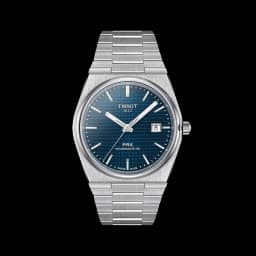
If the Seiko 5 is the entry gateway, the Tissot PRX is the aspirational sweet spot. At $550-625 new, it delivers an integrated steel bracelet, sapphire crystal, and Powermatic 80's 80-hour reserve - features you'd expect to cost twice as much. The PRX regularly surfaces preowned for $400-480, making it achievable at almost any first-watch budget. It's the watch that makes people do a double-take when they hear the price.
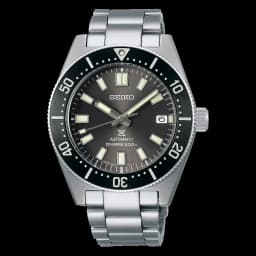
The natural step up for buyers who want more. The Prospex SPB143's in-house 6R35 movement delivers 70 hours of power reserve, genuine 200m dive capability, and a lume plot that glows longer than almost anything at this price. At $700-900 new, it bridges the gap between entry-level and true enthusiast territory - the watch many buyers regret not starting with from the beginning.
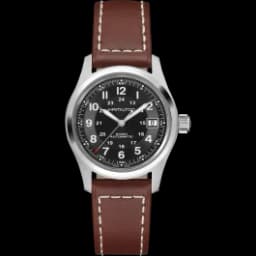
Swiss-made heritage at an honest price. The Hamilton Khaki Field 38mm is manufactured in Biel, Switzerland, runs a Sellita SW-200 (the same base movement as many watches costing three times more), and features an 80-hour reserve plus sapphire crystal. At $650-750 new, it's one of the best-value Swiss-made automatics you can buy as a first watch - especially if you prefer a clean, military-inspired aesthetic over sport styling.
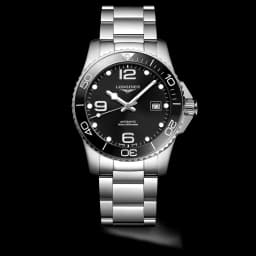
The most credible Swiss-made dive watch under $1,200. Longines is one of the few true Swiss maisons producing certified chronometer movements at accessible prices, and the Hydroconquest's 300m water resistance, ceramic bezel insert, and Master Collection movement credentials make it the aspirational ceiling for first-time buyers ready to invest seriously. If you want one watch that handles everything - office, weekends, travel, and the occasional dive - this is it.
Compare These Watches Head-to-Head
Side-by-side specs, community votes, and expert scores
Seiko
5 Sports SRPE55
Tissot
PRX 40mm
Compare →
Seiko
5 Sports SRPE55
Hamilton
Khaki Field Auto 38
Compare →
Seiko
5 Sports SRPE55
Longines
HydroConquest 41
Compare →
Tissot
PRX 40mm
Hamilton
Khaki Field Auto 38
Compare →
Hamilton
Khaki Field Auto 38
Seiko
Prospex SPB143
Compare →
Seiko
Prospex SPB143
Longines
HydroConquest 41
Compare →
Buying Guide
How Much Should Your First Watch Cost?
Your first serious watch doesn't need to be expensive, but it should be deliberate. Under $200 covers genuine entry-level automatics like the Swatch Sistem51 or Orient Bambino - both capable, honest pieces. The $300-600 range is arguably the best value tier in watchmaking: the Seiko 5 Sports, Tissot PRX, and Baltic Aquascaphe all live here, delivering sapphire crystals, quality movements, and genuine design character. Between $600 and $1,000, you cross into Swiss-made territory with Hamilton, Longines, and pre-owned TAG Heuer. Above $1,000, you're in enthusiast territory - still accessible, but better suited as a second or third watch once you understand your preferences. Start with what you can genuinely afford to wear daily without stress. A $300 watch that gets worn every day will give you far more value than a $1,200 watch that lives in a drawer.
Quartz vs Automatic: Which Movement Type Is Right for You?
Quartz movements run on a battery and keep extremely accurate time - typically within 15 seconds per month. They require virtually no maintenance beyond a battery swap every 2-3 years. Automatic (mechanical) movements are wound by the motion of your wrist, have no battery, and are accurate to within roughly 10-30 seconds per day. They require a service every 5-8 years and stop running if left unworn for a day or two. So which is better? That depends entirely on what you value. Quartz is objectively more practical: cheaper to maintain, more accurate, and worry-free. Automatics offer something quartz cannot - the experience of wearing a miniature mechanical engine on your wrist. Most people who fall deeply into the watch hobby do so because of automatics. If you want a watch to tell time reliably and forget about, quartz is the smarter choice. If you're drawn to the idea of a self-winding mechanical object with centuries of heritage, start with an automatic and you probably won't regret it.
Key Features Every First Watch Should Have
Sapphire crystal is non-negotiable once you've owned a scratched mineral glass watch. Look for this as a baseline on any watch over $200. Stainless steel case construction - not alloy or plastic - ensures the watch will survive years of daily wear without corroding or warping. At least 50m water resistance is the practical minimum for daily life, covering splashes, hand washing, and rain. Avoid the common misconception that 30m or 50m means swimming-safe; it doesn't. For actual swimming, look for 100m minimum. A reliable movement matters more than brand prestige. Seiko's 4R36, Miyota's 9035/9039, and ETA 2824 variants (found in Hamilton, Tissot) are all proven, serviceable, and durable. Avoid cheaply branded 'Swiss Made' watches with uncertified movements - the designation requires only 60% of value to be Swiss, not the movement itself.
Brands Worth Knowing as a Beginner
Seiko is the single most recommended brand for first-time buyers worldwide. Their 5 Sports, Prospex, and Presage lines cover everything from $200 to $800 with consistent quality, reliable movements, and a cult following that makes the hobby feel welcoming. Tissot has been producing affordable Swiss watches since 1853 and their PRX and Gentleman lines represent the best value in certified Swiss movements under $700. Hamilton is owned by Swatch Group (same parent as Omega and Longines) and manufactures genuinely Swiss-made watches at prices that seem impossibly low - start with the Khaki Field. Longines sits one tier above Hamilton in the same group and delivers Master Collection movement credentials and genuine prestige for $800-1,200. For microbrands, Baltic (France) and Christopher Ward (UK) offer exceptional finishing and character at sub-$600 prices that established brands simply cannot match at similar price points.
Where to Buy Your First Watch
Buying new from an authorized dealer gives you the full manufacturer warranty (typically 2-5 years) and genuine peace of mind. For Seiko, Tissot, and Hamilton, authorized dealers include Jomashop, WatchMaxx, and brand boutiques. Preowned is where the real value lives: Chrono24 is the gold standard for preowned watches, with seller ratings, buyer protection, and an enormous inventory. WatchBox and Crown & Caliber offer certified preowned with warranty coverage. eBay and Facebook Marketplace offer lower prices but require more buyer diligence - verify with serial numbers, request additional photos, and check for crown and crystal condition. Avoid grey-market sellers promising 'authentic' at 60% below retail on lesser-known platforms. The main things to verify when buying preowned: original manufacturer papers (less critical for Seiko, more so for Longines and up), case back condition, crown seal integrity, and any service history. A watch that hasn't been serviced in 10+ years may need a $200-400 service shortly after purchase.
Basic Watch Care and Maintenance
Daily care is minimal: rinse your watch under lukewarm water after saltwater exposure, wipe the case and bracelet regularly with a soft cloth, and store it away from magnets (speakers, laptop bags, magnetic phone cases). Crown discipline matters most for water resistance - always push the crown fully in and gently screw it down if it's a screw crown before exposing the watch to water. For automatics, wearing the watch daily is sufficient to keep it running; if you leave it for more than 40-60 hours, you'll need to wind it manually through the crown. Service intervals for automatic movements are typically every 5-8 years for modern movements. Earlier servicing is warranted if the watch stops unexpectedly, gains or loses more than 30 seconds per day, or was exposed to water beyond its rated depth. Avoid polishing the case yourself - it permanently removes finishing character and reduces value on any watch worth reselling.
Frequently Asked Questions
What is the best first watch to buy?▼
The Seiko 5 Sports (around $300 new) is the most universally recommended first watch for good reason: it's a genuine automatic movement, durable stainless steel case, 100m water resistance, and available in dozens of variants to match any style preference. If your budget stretches to $500-650, the Tissot PRX or Hamilton Khaki Field both offer Swiss-made credibility at prices that feel almost too good to be true. The right answer depends on what you'll wear it for - a field watch suits casual and business-casual wear, while a dive watch handles virtually any context.
Should I buy quartz or automatic for my first watch?▼
If you want reliability and practicality: quartz. If you're drawn to mechanical craft and don't mind occasional winding: automatic. Most people who become genuinely interested in watches start with an automatic and never go back - the experience of wearing a self-winding mechanical movement is what turns a purchase into a hobby. That said, quartz watches from brands like Grand Seiko or Longines can cost more than many automatics, so movement type alone doesn't determine quality or price. For a first watch under $500, an automatic Seiko or Tissot is hard to argue against.
How much should I spend on my first watch?▼
Spend what you're comfortable wearing daily without anxiety. The $200-500 range covers the best value in modern watchmaking - Seiko 5, Orient, Tissot PRX, Baltic - all with sapphire crystal and quality movements. Under $200, you'll need to compromise on crystal quality or movement finishing. Above $500, you gain Swiss movement certifications (COSC, Master Chronometer) and improved finishing, but the leap in quality isn't proportional to the price jump. Many enthusiasts' most-worn watches cost under $400, while more expensive pieces sit in drawers.
What does water resistance really mean?▼
Water resistance ratings are often misunderstood. 30m/3ATM means splash resistance only - no submersion. 50m/5ATM covers light swimming but not diving. 100m/10ATM is the practical minimum for regular swimming and snorkeling. 200m/20ATM handles recreational scuba diving. The rating is tested under static pressure, not dynamic movement, so always treat your watch as one resistance tier below its rating during active water use. Critically: water resistance degrades over time as gaskets age. Have any watch you plan to use near water pressure-tested every 2-3 years by a watchmaker.
Are expensive watches worth it for a first purchase?▼
Not typically. The quality jump between a $300 Seiko and a $3,000 TAG Heuer is real but not ten times better - it's more like a refinement in finishing, movement decoration, and brand heritage. For a first watch, you're still learning what styles, case sizes, and complications you prefer. Spending $300-700 on a proven entry-level piece lets you wear it freely, learn your preferences, and make a more informed decision when you eventually invest in something more serious. Many long-time collectors still consider their Seiko 5 or Hamilton their most personally meaningful piece.
How do I size a watch correctly?▼
Case diameter and lug-to-lug are the two measurements that matter most. Diameter (38mm, 40mm, 42mm) is the width of the case face; lug-to-lug is the distance from top to bottom of the case that rests on your wrist. If you have smaller wrists (under 7 inches circumference), look for 38-40mm cases with lug-to-lug under 48mm. Larger wrists can accommodate 42-44mm without looking oversized. Case thickness affects how the watch sits under a shirt cuff - anything over 12mm will struggle under a dress shirt. Try before you buy when possible; a watch that looks great on a photo can feel surprisingly large or small in person.
What watch straps should I buy for my first watch?▼
Most entry-level watches ship on bracelet or a basic rubber/leather strap. The real value of watch collecting comes from strap swapping - a single watch can look completely different on a black NATO, a tan leather, or a rubber sport strap. For versatility, start with a quality NATO strap ($15-30 from reputable sellers like WatchGecko or ZULUDIVER) in a neutral color. Leather straps from Hirsch or Cartier-cut alternatives dress a watch up for office or formal use. Make sure the lug width of your watch (measured between the strap lugs - commonly 18mm, 20mm, or 22mm) matches the strap width exactly. Most Seiko and Hamilton watches use 20mm straps, giving you the widest selection.
Your first watch purchase doesn't need to be perfect - it needs to be worn. The watches in this guide share one quality: they reward daily wear without demanding excessive care or worry. Whether you start with a Seiko 5 Sports as your gateway automatic or stretch to a Hamilton Khaki Field or Longines Hydroconquest as a long-term companion, you're making a purchase that will likely introduce you to one of the most engaging, tactile hobbies available. Use our comparison tool to put any two watches in this guide head-to-head - see how their specs, community scores, and prices stack up before you decide. The best first watch is the one on your wrist.
Related Comparisons
People Also Ask
What watch brand is best for beginners?▼
Seiko is the consensus best brand for first-time watch buyers. Their 5 Sports line starts under $350 and delivers genuine automatic movements, stainless steel construction, and virtually unmatched value per dollar. Tissot is the best Swiss-made option for beginners, with their PRX offering integrated bracelet aesthetics at $550-625. Hamilton sits in the middle - Swiss-made quality at prices between Seiko and Tissot. For beginners willing to explore microbrands, Baltic and Orient both punch significantly above their price class.
Is Seiko a good first watch?▼
Yes - Seiko is arguably the perfect first watch brand. Their movements are reliable, servicing is affordable, and the enthusiast community is enormous and welcoming. The Seiko 5 Sports at around $300 new, or the Seiko Prospex at $700-900, represent two of the most recommended entry-level automatics in the world. Seiko also popularized strap swapping as a hobby - their inter-lug design makes strap changes easy, letting you dramatically change the watch's character without buying a new watch.
More Buying Guides
Buying Guide
Best Watches Under $3,000 - Luxury on a Budget
Top automatic watches under $3,000 from Seiko, Hamilton, Longines, Tag Heuer, and more. Expert picks with full specs.
Read Guide →
Buying Guide
Best Automatic Watches for Beginners in 2026 — Top 5 Picks
New to automatic watches? Our expert buying guide covers the best automatic watches for beginners across every budget — with picks from Seiko, Tissot, Orient, Hamilton, and more.
Read Guide →
Buying Guide
Best Watches Under $500 in 2026 - Expert Picks
The best automatic and quartz watches under $500 in 2026. Expert picks from Seiko, Tissot, Baltic, Hamilton, and more. Reviewed and compared with specs.
Read Guide →
Buying Guide
Best Watches Under $1,000 in 2026 - Top Swiss & Japanese Picks
The best automatic watches under $1,000 in 2026. Swiss-made, Japanese excellence, and top microbrands reviewed and compared by category.
Read Guide →
Brands Featured in This Guide
Seiko
Invented the quartz movement (1969), the kinetic movement (1988), and the spring drive (1999) — more watch innovations than any other single company.
Explore Brand →
Tissot
The official timekeeper of MotoGP, Tour de France, and multiple Olympic sports — worn on the wrist of more Swiss watch buyers than any other brand.
Explore Brand →
Hamilton
Hamilton watches appeared in over 500 films — from 2001: A Space Odyssey to Interstellar — making it the most cinematically featured watch brand in Hollywood history.
Explore Brand →
Longines
One of the oldest Swiss watch brands in continuous operation, Longines has been official timekeeper at the Olympic Games, Wimbledon, and the Kentucky Derby.
Explore Brand →
Compare Any Two Watches
Head-to-head specs, community ratings, and pricing side by side
Start a Comparison