Best Luxury Watches Under $10,000 in 2026
The best luxury watches under $10,000 in 2026. In-house movements, heritage brands, and genuine luxury from Omega, Rolex, TAG Heuer, Cartier, and IWC. Reviewed and compared.
At the $10,000 threshold, you enter genuine luxury territory—in-house movements, sapphire crystals, heritage brands, and watches designed to last decades. The best options:
The $5,000–$10,000 bracket represents a fundamental shift in watchmaking. Below $5,000, most watches use outsourced movements (ETA, Miyota, Sellita). At $10,000, you are entering the domain of in-house calibers, heritage houses with centuries of tradition, and watches that appreciate rather than depreciate. An Omega Seamaster 300m at $5,700 is not simply a dive watch—it is a Master Chronometer-certified instrument with 15,000 gauss anti-magnetic resistance. A Rolex Submariner at $9,100 is not merely stainless steel—it is the watch that defined the dive watch category in 1953 and continues to define it today.
What separates $10,000 watches from everything below is finishing quality, movement architecture, and brand prestige. You will find sapphire bezels, micro-adjustable clasps, hand-finished bridges, and movements that take months to assemble. This guide highlights the strongest entries into genuine luxury—watches that prove the $10,000 price point is where watchmaking genuinely transforms from commodity to heirloom.
See how these watches rank against the full database
View Rankings →Our Picks

Master Chronometer-certified dive watch at $5,700–6,200. Cal. 8800 with 15,000 gauss anti-magnetic resistance, ceramic wave-pattern dial, and 300m water resistance. The most technically advanced sports watch in mass production—and James Bond's watch since 1995.

The definitive luxury dive watch at $9,100–9,600 new. Oystersteel case, Cal. 3235 with 70-hour power reserve, and ceramic bezel that has defined the category since 1953. Unmatched heritage and resale value—the benchmark against which all dive watches are measured.

The luxury dress-sport icon at $7,600–8,100. In-house automatic Cal. 1847 MC with visible balance wheel, crown emblem, and the proportional elegance that made Cartier court jewelry in wristwatch form. The gateway to haute horlogerie.

Swiss automatic chronograph at $5,350–5,800. In-house Heuer-02 movement with column wheel, 80-hour power reserve, and vertical clutch—the same caliber used in watches at double the price. Racing heritage meets accessibility.

Swiss in-house movement at $7,100–7,600. Cal. 32650 with 7-day power reserve—genuinely unusual at this price. Portuguese maritime heritage, hand-finished dial, and an aesthetic that appeals to both dress and casual occasions.
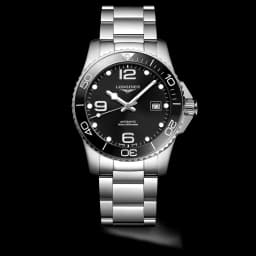
Best Swiss value under $2,000 at $1,200–1,500. COSC-certified L888.4 movement (72-hour power reserve) and 300m water resistance. Pure Swiss craftsmanship from a brand with 185 years of heritage—the entry point to prestige horology.

Japanese haute horlogerie at $5,700–6,300. Spring Drive movement (no battery, no mainspring), 72-hour power reserve, and hand-finished snowflake dial. The Snowflake represents the apex of Japanese finishing—a watch that proves precision and artistry coexist.
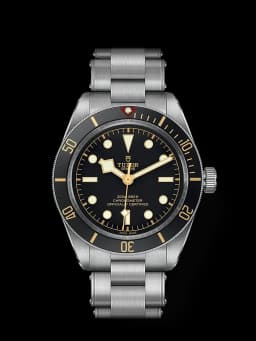
Best value luxury dive watch at $3,600–3,900. COSC-certified in-house MT5402 movement (70-hour power reserve), riveted steel bracelet, and Rolex-adjacent technology at a fraction of the cost. The sweet-spot luxury entry point.
Compare These Watches Head-to-Head
Side-by-side specs, community votes, and expert scores
Rolex
Submariner 41
Omega
Seamaster 300m
Compare →
Omega
Seamaster 300m
Tudor
Black Bay 58
Compare →
Rolex
Submariner 41
Tudor
Black Bay 58
Compare →
IWC
Portugieser 40
Cartier
Santos de Cartier
Compare →
Grand Seiko
SBGA211 Snowflake
Cartier
Santos de Cartier
Compare →
Rolex
Submariner Date
Tudor
Black Bay 58
Compare →
Buying Guide
What Qualifies as Luxury at This Price Point
At $10,000, genuine luxury is defined by: (1) In-house movements—calibers designed and built by the brand itself, not outsourced ETA or Miyota. Omega's Cal. 8800 and 9900, Rolex's Cal. 3235, IWC's Cal. 32650, and TAG Heuer's Heuer-02 are all in-house. (2) Hand-finished details—visible balance wheels, Cotes de Genève on bridges, hand-polished bevels. (3) Sapphire crystal and sapphire bezel inserts (not aluminum bezels). (4) Decades of heritage and proven resale value. (5) Robust service networks spanning global authorized dealers. A $10,000 watch should still be accurate, elegant, and fully serviceable 50 years from now.
In-House vs Outsourced Movements at This Budget
In-house movements represent brands with the manufacturing infrastructure, expertise, and prestige to design and assemble their own calibers. At $10,000 new, in-house is standard: Omega Cal. 8800 (Seamaster 300m), Rolex Cal. 3235 (Submariner), Cartier Cal. 1847 MC (Santos), TAG Heuer Heuer-02 (Carrera), IWC Cal. 32650 (Portugieser). These calibers take months to assemble and finish—hand-polishing, individual adjustment, testing. A watch using an outsourced ETA or Sellita at $10,000 represents poor value; these movements rarely justify six-figure assembly costs.
Resale Value and Market Dynamics
Luxury watches at this tier fall into two categories: (1) Watches with limited production and strong market demand (Rolex Submariner, Omega Seamaster 300m, Cartier Santos)—these typically hold 60–80% of retail value at 3–5 years. (2) Watches with steady production and solid brand loyalty (TAG Heuer Carrera, Longines HydroConquest, Tudor Black Bay 58)—these typically hold 50–65% of retail value. IWC and Grand Seiko occupy a middle ground. Buying new at retail, you should expect to lose 30–40% value initially; holding for 5+ years, the loss stabilizes as the watch becomes vintage. Choose watches you will wear for decades—resale should be a secondary consideration.
Movement Quality: Power Reserve, Finishing, and Certification
At $10,000, minimum standards: 70+ hour power reserve (all recommendations meet this). COSC certification (where applicable—Rolex, Omega, Longines, TAG Heuer, Tudor offer COSC). Hand-finished surfaces visible through the caseback. Screw-down crown for water resistance integrity. A visible balance wheel. Adjustable clasps for micro-sizing. These details distinguish $10,000 watches from $5,000 ones. The Omega Seamaster's Master Chronometer certification (15,000 gauss anti-magnetic tolerance) and Grand Seiko's Spring Drive technology (eliminating the mainspring in favor of piezoelectric oscillation) represent genuine engineering innovations that justify premium pricing.
Dress vs Sports at This Price Point
At $10,000, the boundary between dress and sports watches dissolves. The Cartier Santos ($7,600–8,100) began as a sports chronograph in 1904, yet its proportional elegance makes it a superb dress watch. The Omega Seamaster 300m ($5,700–6,200) is a legitimate dive instrument yet pairs seamlessly with business attire via its ceramic dial. The IWC Portugieser ($7,100–7,600) is a dress watch with 42-hour power reserve and 120m water resistance. The rule: choose the design that excites you daily. Versatility is a feature of luxury watchmaking—the best $10,000 watches work everywhere.
Frequently Asked Questions
What is the best luxury watch under $10,000?▼
Subjective, but the consensus contenders are: (1) Omega Seamaster 300m ($5,700–6,200)—Master Chronometer, 15,000 gauss anti-magnetic, ceramic dial. (2) Rolex Submariner 41 ($9,100–9,600)—heritage benchmark, 70-hour Cal. 3235, unmatched resale. (3) Cartier Santos ($7,600–8,100)—haute horlogerie elegance, in-house Cal. 1847 MC. All three represent different strengths: technical innovation (Omega), heritage prestige (Rolex), or refined design (Cartier). Compare them on our tool to decide based on your priorities.
Is Omega better than Rolex at $10,000?▼
Different strengths. The Omega Seamaster 300m is arguably the more technically sophisticated watch—Master Chronometer certification, 15,000 gauss anti-magnetic resistance, and ceramics across dial and bezel. The Rolex Submariner carries unmatched cultural prestige, better resale value, and a waitlist. The Omega is the smarter watch; the Rolex is the more coveted watch. Both are exceptional. Choose based on whether you prioritize technical excellence or collectibility.
What is the best dress watch under $10,000?▼
The Cartier Santos ($7,600–8,100) is the leading recommendation—in-house Cal. 1847 MC with visible balance wheel, crown emblem, and proportions derived from early 1900s aviation watches. The IWC Portugieser ($7,100–7,600) is an alternative with more horological depth (7-day power reserve via Cal. 32650). The Omega Seamaster 300m ($5,700–6,200) works as a dress-casual bridge with its wave-pattern ceramic dial. All three pair elegantly with business attire.
Should I buy Rolex or Omega at this price?▼
Rolex if you prioritize heritage, market prestige, and resale value—the Submariner 41 at $9,100–9,600 is the market standard. Omega if you prioritize technical innovation and precision—the Seamaster 300m at $5,700–6,200 offers Master Chronometer certification and anti-magnetic technology at a lower price. You could also buy both: the Seamaster at $5,700 plus TAG Heuer Carrera at $5,350 for $11,050 would give you three exceptional in-house movements for under the price of the Submariner alone.
What is the difference between in-house and ETA movements at this budget?▼
In-house movements (Omega Cal. 8800, Rolex Cal. 3235, Cartier Cal. 1847 MC, IWC Cal. 32650) are designed and assembled by the brand—months of hand-finishing, individual adjustment, and quality testing. ETA movements (outsourced Swiss calibers) are mass-produced commodities sold to hundreds of brands. At $10,000 new, a watch using a standard ETA represents poor value—in-house movements are standard at this tier and justify the premium through finishing, longevity, and brand identity. Any $10,000 watch should feature an in-house movement.
Is TAG Heuer Carrera a luxury watch?▼
Yes, increasingly so. The Carrera 42 with in-house Heuer-02 movement ($5,350–5,800) represents the modern democratization of luxury. In-house column-wheel chronograph movement, 80-hour power reserve, and Swiss manufacturing at under $6,000 would have cost $12,000 ten years ago. TAG Heuer is owned by LVMH and manufactures under strict luxury standards. The Carrera competes directly with chronographs costing twice as much—and often wins on movement sophistication.
Should I buy new or preowned at this budget?▼
Both are valid. Buying new ensures full warranty, pristine condition, and authorized service. Buying preowned (on platforms like Chrono24, Crown and Caliber, or WatchBox) at 3–5 years often yields 15–25% savings if you find examples in excellent condition. For Rolex and Omega at this tier, preowned markets are robust. Key consideration: verify service history on automatics over 5–7 years old. A recently serviced preowned Seamaster 300m at $4,500–5,000 may offer better value than new at $6,000.
What is the best gateway to luxury watches under $10,000?▼
The TAG Heuer Carrera 42 ($5,350–5,800) or Longines HydroConquest 41 ($1,200–1,500). Both offer in-house or COSC-certified movements, sapphire crystals, and 80+ hour power reserves at prices that feel accessible. They deliver genuine luxury credentials without the Rolex prestige tax. Alternatively, buy a preowned Omega Seamaster 300m at $4,500–5,000 for Master Chronometer certification and anti-magnetic technology.
The $10,000 luxury watch market represents a genuine threshold—the point where brand heritage, in-house movements, and finishing quality become standard rather than premium. Whether you choose the technical innovation of the Omega Seamaster 300m, the heritage prestige of the Rolex Submariner, the refined elegance of the Cartier Santos, or the value proposition of the TAG Heuer Carrera, you are entering the domain of heirloom watchmaking. These watches are designed to last 50+ years, hold their value, and pass to future generations. Use our comparison tool to put your shortlist side-by-side—see exactly how the specs, price points, and community ratings compare before you invest in a watch that will outlast you.
Related Comparisons
People Also Ask
What is the best luxury watch under $10,000?▼
The Omega Seamaster 300m ($5,700–6,200), Rolex Submariner 41 ($9,100–9,600), or Cartier Santos ($7,600–8,100) are the top choices—all in-house movements, heritage brands, and resale value.
Is Rolex or Omega better under $10,000?▼
Omega delivers more technical innovation (Master Chronometer, 15,000 gauss anti-magnetic); Rolex delivers more prestige and resale value. Both are exceptional—choose based on whether you prioritize engineering or collectibility.
What luxury watch should I buy as my first $10,000 watch?▼
The TAG Heuer Carrera 42 ($5,350–5,800) or Omega Seamaster 300m ($5,700–6,200) offer the best balance of technical credentials, resale value, and wearability. Both feel genuinely luxurious without the Rolex prestige premium.
Can I get an in-house movement under $10,000?▼
Yes—all recommendations feature in-house movements: Omega Cal. 8800, Rolex Cal. 3235, Cartier Cal. 1847 MC, TAG Heuer Heuer-02, IWC Cal. 32650. In-house movements are standard at this tier and justify the premium through finishing, longevity, and brand identity.
More Buying Guides
Buying Guide
Best Dive Watches in 2026 — From Budget to Luxury
The best dive watches in 2026 across every budget. From Seiko Prospex under $900 to Rolex Submariner, reviewed and compared with full specs.
Read Guide →
Buying Guide
Best Dress Watches in 2026 — Elegance at Every Budget
The best dress watches in 2026 from Nomos, Cartier, Grand Seiko, IWC, Longines, and more. Expert picks with full specs and honest reviews.
Read Guide →
Buying Guide
Best Watches Under $5,000 — The Sweet Spot for Luxury
Luxury watches under $5,000 from Tudor, Breitling, IWC, Longines, Omega, and Nomos. Expert recommendations with full specs.
Read Guide →
Buying Guide
Best Sports Watches for Active Men in 2026 — Expert Guide
The best sports watches for active men in 2026: durable, shock-resistant, water-resistant watches from Omega, Rolex, TAG Heuer, Seiko, and Tudor. Expert picks with real specs.
Read Guide →
Brands Featured in This Guide
Omega
The only watch worn on the Moon. The Speedmaster was NASA-qualified in 1965 and accompanied every Apollo mission.
Explore Brand →
Rolex
The most recognised watch brand on Earth, producing roughly 1 million watches annually — all in-house.
Explore Brand →
Cartier
Cartier created the first men's wristwatch in 1904 for aviator Alberto Santos-Dumont — the Santos is still in production today.
Explore Brand →
TAG Heuer
Motorsport's official timekeeper for over 50 years — TAG Heuer has timed Formula 1, Le Mans, and the Monaco Grand Prix.
Explore Brand →
Compare Any Two Watches
Head-to-head specs, community ratings, and pricing side by side
Start a Comparison