Best Automatic Watches Under $3,000
Top automatic mechanical watches under $3,000 from Seiko, Hamilton, Longines, Tissot, and more. Expert picks with full specs.
An automatic movement — wound by wrist motion rather than battery or hand winding — represents the beating heart of modern watchmaking. Under $3,000, you can own automatics from legendary manufacturers: Seiko's robust field and dive movements, Hamilton's respected H-10, Longines' COSC-certified Swiss movements, and independent German makers like Nomos. We've selected eight automatics that represent exceptional value and engineering across categories.
See how these watches rank against the full database
View Rankings →Our Picks
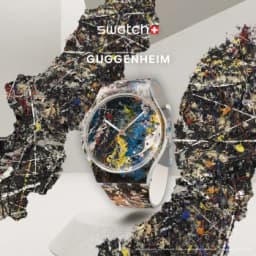
The revolutionary automated assembly automatic at $100. 51 jewels, chronograph-grade complications, and ETA's proof that affordable automatics are philosophically possible.

The essential automatic at $250-350. Day/date, 42.5mm case, 100m water resistance, and the legendary 4R36 movement — the standard by which all budget automatics are measured.
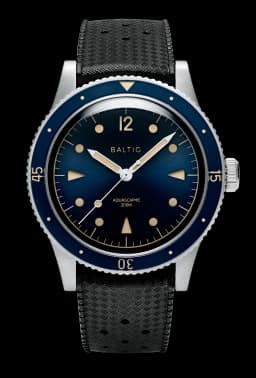
Independent watchmaker automatic at $530-630. Vintage dive proportions, Miyota 8215 automatic, 300m water resistance, and proof that microbrands deliver credible alternatives.
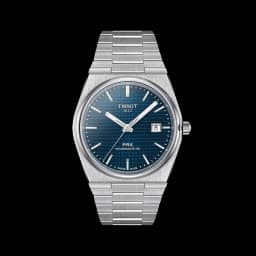
Integrated-bracelet automatic at $550-650. Swiss COSC-certified PR100 movement, sapphire crystal, and a design that evolved from the original 1978 PRX concept.
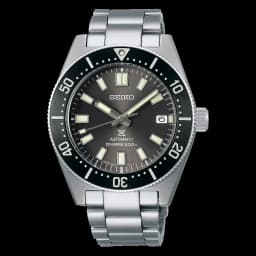
Professional automatic dive watch at $700-900. Seiko's 6R15 movement, 300m water resistance, sapphire crystal, and 60+ years of Prospex dive tradition.

Cocktail aesthetic automatic at $1,100-1,400. 40.8mm case, 6R35 movement with 70-hour power reserve, and a stunning hand-applied dial with vintage character.
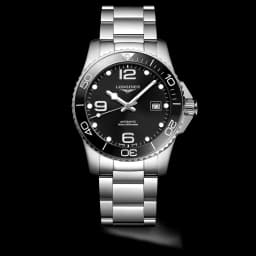
Swiss automatic dive tradition at $1,200-1,400. COSC-certified DolceMX movement, 300m water resistance, and Longines' legendary Hydroconquest heritage since 1959.
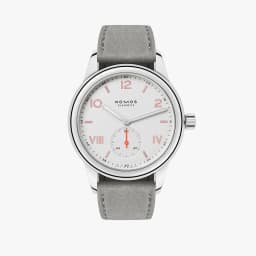
German in-house automatic at $1,900-2,200. DUW 3001 movement, 36mm Bauhaus proportions, and the philosophy that complications should be invisible to the wearer.
Compare These Watches Head-to-Head
Side-by-side specs, community votes, and expert scores
Buying Guide
Japanese vs Swiss Automatics Under $3,000
Japanese automatics (Seiko 4R/6R series, Miyota 8215) are robust, accurate, and require less service — a Seiko automatic will run 20+ years with basic maintenance. Swiss automatics (Hamilton H-10, Longines DolceMX, Tissot PR100) are COSC-certified and carry watchmaking heritage but require more frequent servicing. Both philosophies deliver excellence. Japanese automatics offer pure functionality; Swiss automatics offer heritage and certification credibility. Your choice reflects whether you value engineering excellence (Japanese) or horological tradition (Swiss).
Power Reserve and Accuracy
Most automatics under $3,000 deliver 40-50 hours of power reserve — plenty for regular wear. Seiko's prestige line (Presage SPB167) achieves 70-hour reserve through balance design and larger barrels. Power reserve matters mainly if you travel or remove watches regularly. Accuracy variance: Japanese automatics typically ±15 seconds per day; Swiss COSC-certified automatics guarantee ±4 seconds per day. For daily wear, the difference is imperceptible — it only matters for precision timekeeping.
Rotor Visibility: Case Back Windows
Automatics feature rotating rotors (the weight that winds the mainspring). Most watches include exhibition case backs to display the rotor. Some (Hamilton Khaki Field) skip the window for a solid case back — stronger, more durable, less showmanship. For collectors who enjoy the mechanical beauty, exhibition backs are desirable. For durability and simplicity, solid case backs are superior. Neither choice affects functionality.
Service Intervals and Availability
Japanese automatics (Seiko, Citizen, Orient) have abundant independent service options worldwide — generally $300-500 for a full overhaul. Swiss automatics (Hamilton, Longines, Tissot) are serviced by authorized dealers, typically $600-1,000 per overhaul. German automatics (Nomos) require specialized service, often by independent watchmakers. Seiko is the most economical to maintain long-term. All automatics require service every 3-5 years depending on use.
Frequently Asked Questions
What is an automatic watch and how does it work?▼
An automatic watch winds itself through wrist motion. A rotor (oscillating weight) rotates with arm movement, winding the mainspring via a series of gears. The wound mainspring releases energy steadily, powering the watch. Automatics require no battery or hand-winding — just regular wear. They're more complex than quartz (more friction points, more service required) but offer mechanical beauty and independence from batteries.
Should I buy an automatic or quartz watch under $3,000?▼
Automatics offer mechanical beauty, sustainability (no batteries), and aging character — ideal if you enjoy watches as objects. Quartz offers accuracy, lower maintenance, and reliability — ideal if you want a pure tool. At $3,000 budget, automatics dominate — the Seiko 5 Sports ($250) is unmatched for value. Quartz only makes sense if you specifically want chronographs or highly specialized functions.
How often do automatic watches need servicing?▼
Every 3-5 years of regular wear. Japanese automatics (Seiko) are resilient and often go 5+ years trouble-free. Swiss automatics typically need service by 4-5 years. Service cost ranges from $300-1,000 depending on the brand and extent of needed repairs. Maintenance is the cost of automatic ownership — plan for it.
Can I replace an automatic watch's battery?▼
Automatics don't have batteries — they're mechanically wound by motion. Some automatics (like Seiko Presage SPB167) have sufficient power reserve for 2-3 days without wearing. If your automatic stops, it needs winding or wearing to restart. If you need a 'no-maintenance' watch, quartz is the right choice.
The automatic watch celebrates mechanical engineering — thousands of moving parts working in perfect synchronization to measure time without batteries or hand-winding. Under $3,000, you can own automatics that represent the pinnacle of accessible watchmaking: Seiko's robust engineering, Swiss horological tradition, and independent makers proving that mechanical excellence needn't cost a fortune. Compare your favorites directly and discover which automatic resonates with your collecting philosophy.
Related Comparisons
People Also Ask
What is the best automatic watch under $500?▼
The Seiko 5 Sports SRPE55 at $250-350 is exceptional. The Swatch Sistem51 at $100 is philosophically remarkable. The Tissot PRX at $550-650 and Baltic Aquascaphe at $530-630 bridge the $500 boundary with Swiss or quality engineering.
Will an automatic watch work in space?▼
No — automatic watches require gravity and motion to wind. In zero gravity, the rotor won't turn and the mainspring won't wind. Manual wind (hand-wound) watches work in space because they don't depend on gravity. Astronauts typically wear hand-wound watches or quartz.
How accurate are automatics compared to quartz?▼
Typical automatic: ±15 seconds per day (±5,400 seconds per year). Typical quartz: ±15 seconds per month. COSC-certified automatics: ±4 seconds per day. For daily wear, automatics are acceptably accurate. If you need chronometer-grade precision, COSC-certified automatics or quartz are better choices.
More Buying Guides
Buying Guide
Best Watches Under $3,000 — Luxury on a Budget
Top automatic watches under $3,000 from Seiko, Hamilton, Longines, Tag Heuer, and more. Expert picks with full specs.
Read Guide →
Buying Guide
Best Watches Under $500 in 2026 — Expert Picks
The best automatic and quartz watches under $500 in 2026. Expert picks from Seiko, Tissot, Baltic, Hamilton, and more. Reviewed and compared with specs.
Read Guide →
Buying Guide
Best Watches Under $1,000 in 2026 — Top Swiss & Japanese Picks
The best automatic watches under $1,000 in 2026. Swiss-made, Japanese excellence, and top microbrands reviewed and compared by category.
Read Guide →
Buying Guide
Best Dive Watches in 2026 — From Budget to Luxury
The best dive watches in 2026 across every budget. From Seiko Prospex under $900 to Rolex Submariner, reviewed and compared with full specs.
Read Guide →
Brands Featured in This Guide
Seiko
Invented the quartz movement (1969), the kinetic movement (1988), and the spring drive (1999) — more watch innovations than any other single company.
Explore Brand →
Tissot
The official timekeeper of MotoGP, Tour de France, and multiple Olympic sports — worn on the wrist of more Swiss watch buyers than any other brand.
Explore Brand →
Longines
One of the oldest Swiss watch brands in continuous operation, Longines has been official timekeeper at the Olympic Games, Wimbledon, and the Kentucky Derby.
Explore Brand →
Compare Any Two Watches
Head-to-head specs, community ratings, and pricing side by side
Start a Comparison